De Morgan’s Law and Bubble Pushing Solved Problems Step By Step

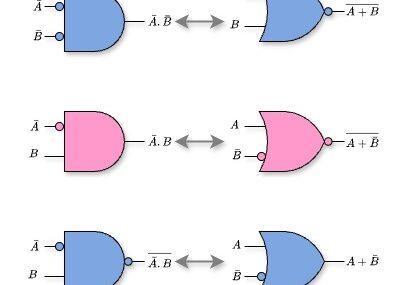
I explained De Morgan’s Law earlier. In this tutorial, I will solve some problems on this topic. Bubble pushing is another important technique, that should be addressed in this topic. Learning Objectives: I will show step-by-step procedures for bubble logic or bubble pushing. There is a detailed explanation for two examples while the rest are solved directly.…

The Buffer Gate – Introduction & Design

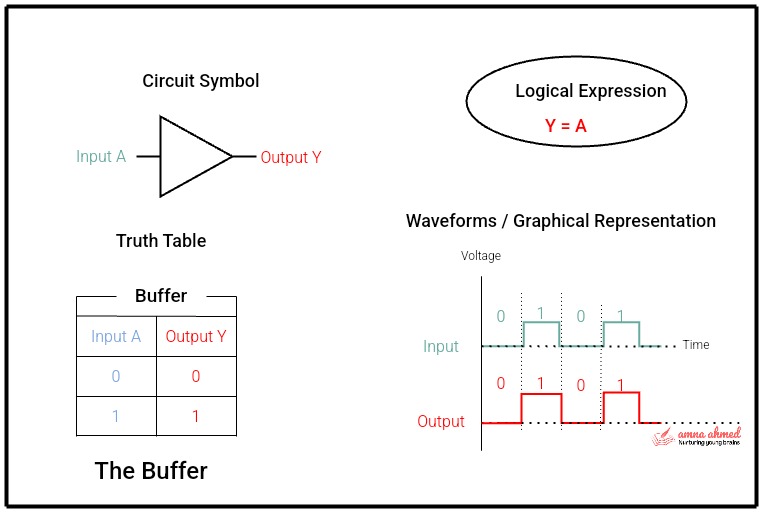
The first simplest and most fundamental logic circuits used in digital electronics is a buffer. A buffer is a single-input, single-output logic gate. The output is exactly same as the input. In essence, a buffer is a device that amplifies or strengthens the signal it receives. While it does not change the logic state of the…

The XNOR Gate

The XNOR Gate: The logic symbol is the same as the XOR gate with an inversion bubble placed at the output side. The exclusive NOR gate produces an inverted output as that of the XOR gate.   Learning Objectives: Introducing XNOR gate implementation using Switches Diodes BJT   Working: Case 1:  Input A = 0…

Analysis Of Algorithms

Analysis Of Algorithms – Time Complexity & Space Complexity Analysis Of Algorithms Outline: Analysis of an algorithm Time complexity Types of time functions/Order of algorithm Space complexity In this lesson, you will learn about the theoretical aspect of the algorithms. In the previous lesson, you have learnt about algorithms. Whenever you design an algorithm, you should…

Introduction To Algorithms:

Outline: What is an algorithm with examples Properties Representation Pseudocode Flowcharts Examples An algorithm is a term commonly used in computer science and mathematics. It is a ‘problem-solving method’.  You must be familiar with this term. It is the finite set of instructions, logic and step by step procedure execute in a finite amount of time. You can…